August 30, 2013

New Nexus 7 launches in UK

Google's Hugo Barra shows off the Nexus 7 tablet computer.

The tablet has also been released in the US, Canada, France, Germany and Japan.
In this country the Nexus 7 2 is retailing for £199.99 for the 16GB model and £239.99 for the 32GB version.
The original version of Google’s tablet was launched last year. Since then the device has been slimmed down and given a number of extra features.
The new device features wireless charging, 4G connectivity and a screen that offers 323 pixels per inch.
Google has claimed the screen made the next generation Nexus 7 the world’s highest resolution tablet, comparing favourably to the iPad’s Retina Display, which offers 264 pixels per inch. Both models offer higher resolutions than most users can perceive.
The company said it could offer up to 10 hours of battery life, and that its GHz processor was 80 per cent faster than the original model. Memory has been doubled to GB, and it also features wireless charging, the latest version of Bluetooth for compatibility with wearable technologies such as watches, and NFC.
The 144 x 200 x 9.15 mm tablet is lighter than its predecessor, at 299g with Wi-fi and 310g with 4G LTE. The 1920 x 1200 HD display also comes with 5MP rear and 1.2MP front cameras, as well as dual stereo speakers.
The device is also the first to feature the new version of Android, 4.3, which includes individual user profiles which can be restricted so that, for instance, children cannot see in-app purchasing options that could land their parents with huge bills.

HTC ONE REVIEW


HTC has a new flagship model in its lineup. The HTC One has become official and it comes with a range of high end features loaded in it. In addition to the high computing power, this model is also renowned for being the first smartphone to feature an ultrapixel camera. The HTC One 801e, which doesn't support 4G LTE, is the Indian variant. The European version is referred by the name HTC One 801n and it comes with LTE support. The detailed specifications of this model is as follows. 

OS & Processor 

The HTC One comes with Android 4.1.2 Jelly Bean OS loaded in it. This smartphone is also renowned for its great computing power. This device features a 1.7 GHz quad core processor. The Snapdragon 600 processor is featured in a smartphone for the first time. The 2 GB RAM helps in multitasking and performance of this device. 

Hardware 

The physical dimensions of this smartphone is on par with other smartphones in the market. The HTC One weighs 143 grams and measures 9.3 mm in thickness. The 4.7-inch display screen is protected by Corning Gorilla Glass 2. The display screen offers visuals at 1080 x 1920 pixel resolution. The phone also incorporates a 2300 mAh battery in it. 

Camera 

The HTC One has a special focus on its camera mainly because of the fact that it features ultrapixel technology for the first time. The 4 MP ultrapixel sensor in this smartphone camera produces bigger pixels in images, thereby resulting in a much clearer picture than that of other smartphone cameras. A 2.1 MP front camera is also available for video calls. 

Memory & Media 

This smartphone comes with 32 GB or 64 GB internal memory options. There is no external memory slot available here. The HTC One comes with multi-format media players that are capable of playing various audio and video files. The device comes preloaded with a range of entertainment features. More applications can be downloaded from Google Play. 

Internet & Connectivity 

The HTC One supports multiple platforms like GPRS, EDGE, WiFi and 3G for connecting to the internet. 4G LTE support is also available in select markets. Other connectivity features available in this device include Bluetooth, NFC and micro USB port etc.

August 29, 2013

Samsung spots top in Indian mobile market

Samsung tops Indian mobile handset mkt survey
Korean electronics major Samsung has taken the top position in India replacing Nokia in the Indian mobile handset market that witnessed a 14.17 per cent growth year-on-year to Rs 35,946 crore in 2012-2013, according to a survey.

The 18th annual survey 'V&D 100' said that the Indian mobile handset market posted a revenue of Rs 35,946 crore in 2012-2013, compared to Rs 31,330 crore in the earlier fiscal year on the back of increasing sale of smartphones.

Samsung's rise in India was attributed to its rich product portfolio catering to customers of all categories.

The company's handset prices ranging from Rs 1,500 to Rs 50,000 in varied screen sizes, besides product quality and new features, helped the company grab customers' attention, the survey report said.


Samsung ended the year with a revenue of Rs 11,328 crore compared to Rs 7,891 crore last year showing a growth of 43.6 per cent. The company also became the market leader with a 31.5 per cent market share.

Nokia was down by a rank to be placed at number two in the Voice&Data survey with a 27.2 per cent market share following a significant 18 per cent drop in revenue, the report showed.

In the 12 months ended March 2013, Nokia's revenue from Indian operations was placed at Rs 9,780 crore compared to Rs 11,925 crore in the last financial year, it added.

"The rise of smaller local players like Micromax, Karbonn, Lava and Zen was a clear indication that consumers wanted cheaper feature phones. The next phase of mobile penetration in India, now at the bottom of the pyramid, will be driven by these companies," says Ibrahim Ahmad, Group Editor, Voice&Data.

Homegrown handset company Micromax captured the number three position among V&D100 Top10 mobile handset brands for FY'13 and enjoyed a market share of 8.7 per cent and earned revenue of Rs 3,138 crore.

Closing in was Karbonn Mobiles, the company among the Indian handset players that grew most consistently.

In 2012-2013, Karbonn grew 73.1 per cent to register revenue of Rs 2,297 crore, with market share of 6.4 per cent, compared to Rs 1,327 crore in the last financial year, it said.

The iconic Apple posted a revenue of Rs 1,293 crore in FY 2013 in the country compared to Rs 250 crore in the previous financial year, occupying the fifth place, the survey report added.

UBUNTU EDGE IS NO MORE ALIVE

Canonical's attempt to raise $32 million to build the Ubuntu Edge, a powerful phone that can double as a desktop when docked with a monitor, mouse, and keyboard, has failed. The crowdfunding campaign on Indiegogo took in "only" $12.8 million before the deadline passed a few hours ago.
Canonical founder Mark Shuttleworth had told BBC that the Edge would be such a high-end device that "we would have been bringing the future forward a year or two at least." But this doesn't mean Ubuntu phones themselves are dead. The smartphone interface for the Ubuntu operating system is still being developed, and carriers around the world have signed on as potential launch partners.
We've asked Canonical if it has any alternative plans now that the Edge campaign is over, and we haven't heard back. However, the company posted a final update to the Indiegogo page:
We raised $12,809,906, making the Edge the world’s biggest ever fixed crowdfunding campaign. Let’s not lose sight of what an achievement that is. Close to 20,000 people believed in our vision enough to contribute hundreds of dollars for a phone months in advance, just to help make it happen. It wasn’t just individuals, either: Bloomberg LP gave $80,000 and several smaller businesses contributed $7,000 each. Thank you all for getting behind us.
Then there’s the Ubuntu community. Many of you gave your time as well as money, organising your own mailing lists, social media strategies and online ads, and successfully reaching out to your local media. We even saw entire sites created to gather information and help promote the Edge. We’ll be contacting our biggest referrers personally.
Most importantly, the big winner from this campaign is Ubuntu. While we passionately wanted to build the Edge to showcase Ubuntu on phones, the support and attention it received will still be a huge boost as other Ubuntu phones start to arrive in 2014. Thousands of you clearly want to own an Ubuntu phone and believe in our vision of convergence, and rest assured you won’t have much longer to wait.
Since the campaign didn't meet its funding requirement, refunds will be processed to backers within five business days, Canonical said.
The public exposure Ubuntu phones got during the campaign is much-needed, considering that they will be coming to market long after iOS and Android have become entrenched in consumers' minds as the premier mobile operating systems.

Shuttleworth told Ars recently that investment in Canonical's phone project is one factor that's keeping the company from becoming profitable immediately. But the gamble is worth it, he said, to create a single platform powering smartphones, tablets, PCs, servers, and cloud networks operating in giant data centers.

One positive from the crowdfunding was that it helped Canonical negotiate with major component suppliers to lower the cost of building Ubuntu phones. While that won't result in production of the Edge itself (unless Canonical has another trick up its sleeve), those kinds of negotiations will be important for Canonical as it brings other Ubuntu phones to market.
The first Ubuntu phones are expected to go on sale in Q1 2014. Those meeting certain specs (including a Quad-core A9 or Intel Atom processor, 1GB memory, and 32GB of flash storage) would be able to double as a PC when docked. The Edge would have had an unnamed multi-core CPU, 4GB of RAM, and 128GB of storage.
For now, those of you wanting to use Ubuntu Touch on a smartphone or tablet will have to install prerelease versions onto one of Google's Nexus devices.

Micromax Canvas HD A116 is beautiful, awesome and great in R 13999

The recently released Micromax Canvas HD A116, is beautiful and amazing device under Rs 13999.
This phone runs the Androidn4.1.1. Jelly Bean operating system on the 1.2 GHz quad-core processor supported by 1 GB of RAM. The phone under 14KJ is the best available in the market and that is apparent from the fact that the stock got wiped-off within a day of its arrival. The company has also stopped taking pre-orders of this phone now, but for the lovers pre-orders can be placed at Saholic today.
Since the phone is yet to reach the stores and our hands, we cannot gives a hands-on now. But, here we bring what others are saying about this product. This, we are sure will help you make a decision.
“The entire handset bears a striking resemblance to the HTC One X, so it scores high on aesthetics as well. The battery cover is easy to remove thanks to the soft plastic. The handset is quite comfortable even if you don’t have large hands and fits snugly in your pocket. You’ll want to be careful where you place your phone, though, as the protruding camera lens could get scratched easily. Overall, we really like what Micromax has achieved here; it is definitely a step above its previous offering” says the Tech2 review.
“Thanks to the HD resolution, pictures and videos look great on the phone. The IPS panel also creates a great viewing angle. Touch response of Micromax Canvas A116 is also great”, says a review by India TV. The camera is not great, but in the kind of budget this is decent enough. It is 8 megapixel one and is able to click decent images and record HD videos says this review.

ThinkDigit compared this phablet with the others in the Sub-15000 segment and found that “the Micromax A116 Canvas HD did outperform the competition and quite frankly, we were impressed with the results. For the price you pay, you are getting a great package in the form of the A116The Canvas HD runs on Android 4.1 Jelly Bean, and comes with a refreshing 'upgradeable to Android 4.2' claim.”

August 12, 2013

Quantum computing: The next information revolution


November 16, 2012 | Author: Freelance Writer Brad Hooker
Quantum computing: The next information revolution
An artist's conception of an array of spin qubits based on subatomic nuclear memory. (Illustration by Peter Allen, courtesy of David Awschalom, UCSB)
Curiosity drives humanity. When confronted with a new phenomenon, we are compelled to search for understanding. We can then control the science with new technologies, making life easier. This, says AAAS fellow Raymond Laflamme, grants us time to be curious.
In the rapidly evolving field of quantum computing, curiosity over the last hundred years has driven scientists to the brink of controlling this once exoticworld.
Quantum computers, with the capacity to complete in an instant calculations that a classical computer with all the time and energy in the universe could never solve, will propel the next information revolution. Yet the concept of quantum computing is young and, so far, no scientist can predict with certainty when that revolution will occur.
For one AAAS fellow and his team of researchers, the missing tool to jump-start this revolution may be found in diamonds.

The subatomic ocean

Observations and theories in quantum mechanics have led to stories of subatomic particles breaking all known laws of classical physics, essentially walking through walls, teleporting across vast distances and traveling back in time.
Quantum particles can occupy two states at the same time. Incredibly sensitive, their characteristics change in the simple process of observing them. Yet in measuring the interactions of particles with higher mass, experimenters can calculate minute energy fluctuations, allowing a better understanding of this quantum soup.
“Quantum mechanics tells you that the quantum [computing] bit or the quantum coin can be both tails and heads at the same time. And this is really changing how the world works,” says Laflamme, the executive director of the University of Waterloo’s Institute for Quantum Computing.
An early scientist to envision a computing system to harness the nature of quantum physics, Richard Feynman, a renowned physicist and mathematician, suggested in 1982 that the strange ability of quantum particles to occupy multiple states—known as superposition—would theoretically allow for parallel calculations. The idea presented a method far more efficient for solving certain problems than the linear factoring system of classical computing that is based on 1s and 0s.
“We already have the technology to harness a small part of the quantum world. That’s what lasers are and that’s what magnetic resonance imaging is,” says Laflamme. “We want to go further than this and there’s quite a big ocean. So now that we have dipped our big toe in the water of the ocean of the quantum world, we try to go deeper.”
Yet this pursuit has been obstructed by defects found in the nanostructures of traditional computers – imperfections magnified exponentially on the quantum scale. This led physicists in the field to scoff at the idea of being able to contain and control these particles.
In five years – a comparative leap in the long history of quantum research – that thinking changed.

August 6, 2013

Android 5.0 Key Lime Pie to launch with new Nexus 10 by October


If information circulating the Internet is to be believed, then Samsung will make the next generation Nexus 10 tablet and the device will launch in October 2013. In the past, every time Google has shown off a new Nexus device, the device runs on a new version of the Android OS. It seems like the new Nexus 10 will run on the much-anticipated Android 5.0 Key Lime Pie.
It makes sense that the new Nexus 10 will run on Android 5.0 since this October Android celebrates its fifth birthday. Android 5.0 Key Lime Pie has been a part of the rumour mills for quite some time now. October is also the rumoured time frame for the launch of the next generation Nexus smartphone, the Nexus 5. Sundar Pichai president of Android and Chrome has confirmed the existence of the new Nexus 10 device and the fact that it will be made by Samsung.
With every new Nexus device, Google has unveiled a new version of the Android OS. The Galaxy Nexus showed off Android 4.0 Ice Cream Sandwich back in 2011. The first generation Nexus 7 was launched at Google I/O 2012 and brought with it Android 4.1 Jelly Bean. Towards the end of 2012, we saw the launch of the Nexus 4 and Nexus 7 HSPA+ that brought with it Android 4.2 Jelly Bean. In November 2012 the Nexus 10 was launched and Ran on Android 4.2. Last we saw the launch of the second generation Nexus 7 that brought with it Android 4.3 Jelly Bean.
The first generation Nexus 10 runs on a 1.7GHz dual-core Samsung Exynos 5250 CPU. It has a quad-core Mali T604 GPU coupled with 2GB RAM. The tablet has a 10-inch display that boasts of a 2560x1600 pixel resolution. The rear of the tablet has a 5MP camera and the front has a 1.9MP video-calling camera. It is powered with 9000mAh battery.

World’s first road-powered electric vehicle network switches on in South Korea

South Korea has rolled out the world’s first road-powered electric vehicle network. The network consists of special roads that have electrical cables buried just below the surface, which wirelessly transfer energy to electric vehicles via magnetic resonance. Road-powered electric vehicles are exciting because they only require small batteries, significantly reducing their overall weight and thus their energy consumption. There’s also the small fact that, with an electrified roadway, you never have to plug your vehicle in to recharge it, removing most of the risk and range anxiety associated with electric vehicles (EVs).
An OLEV in South Korea, about to drive over an electrified strip of road

Exact details of the system are hard to come by, but we believe that the power is delivered by cables that are around 12 inches (30cm) below the road surface. The power is transmitted wirelessly via Shaped Magnetic Field in Resonance (SMFIR), a technology developed by the Korea Advanced Institute of Science and Technology (KAIST) that essentially runs 100 kilowatts of power through some cables at a very specific frequency (20 kHz in this case), creating a 20 kHz electromagnetic field. The underside of the bus is equipped with a pick-up coil that’s tuned to pick up that frequency, and thus AC electricity is produced via magnetic resonance. (Read: How wireless charging works.) Transmission efficiency is an impressive 85% thanks to the “shaped” part of the technology, which targets the electromagnetic field at the vehicle, so that less energy is lost to the environment.
The relative complexity of a hybrid (top) vs. OLEV
The relative complexity of a hybrid (top) vs. OLEV. The reduced complexity will result in cheaper/lighter/more efficient vehicles.
The OLEV receives 100 kilowatts of power via SMFIR, while maintaining a 17cm gap between the underside of the bus and the road surface. Because each OLEV has a small battery (about one-third the size of the battery in a conventional EV), only small portions of the road (5-15%) need to be electrified. Further increasing efficiency and reducing the radiation received by other road users and pedestrians, the electrified sections only turn on when an OLEV approaches. (In case you do get caught near a strip of electrified road as an OLEV passes by, the level of radiation produced by SMFIR is well within the limits imposed by international EMF standards.)
Moving forward, 10 more buses will be added to the network by 2015 — and presumably there are also plans to add more stretches of electrified roads. The fact that only 5-15% of the road needs to be dug up and replaced might sound positive at first blush, but it’s still a massive undertaking in any kind of built-up area. Trains and trams might require electricity for their entire runs, but it’s much easier to install overhead power lines than to dig up a road.
Still, if we push the logistical issues aside for a moment, it’s hard to overstate the advantages of a nationwide electrified road network. You would never need to stop at a filling/charging station ever again. The design and engineering of cars would change dramatically, as large engines, fuel tanks, and batteries would no longer be required. Reducing our reliance on fossil fuels would of course be a boon to the environment, too. The electric road would be a network in the computer sense of the word, too, potentially allowing for all sorts of vehicle tracking, autonomous driving, vehicle-to-vehicle networks, smart braking, and more.
It’s just a shame that we’re probably decades away from a nationwide electrified road; the installation costs, in terms of construction work and lost productivity due to traffic delays, would really be quite phenomenal.

Top 3 Upcoming Linux Based Mobile OS That Can Challenge Android


1. Tizen

Tizen is a Linux-based mobile OS. it was earlier known as LiMo (Linux on mobile) but was renamed to Tizen after Meego project was stopped and Intel joined LiMo project.  As the case with most of the OS’s these days, Tizen is also an OS for multiple category of devices like mobile phones, smart TVs, tablets etc. The USP of Tizen is the ease through which network carriers can provide Value Added Services (VAS) to their subscribers.
Tizen_Pinwheel
Linux foundation oversees Tizen project while Samsung and Intel that form the technical steering group (TGS) play an active role in governing this project. Network Carriers especially in Japan have shown a good interest in Tizen while Samsung is expected to roll out new Tizen based devices soon.
Despite of a steady growth that Tizen is experiencing, the only point of concern is the app store for this OS. Application store for any smart phone OS has become an important factor that can make or break the market. We have to wait and see how Tizen performs on this aspect.

2. Jolla Sailfish

Sailfish OS Another upcoming Linux-based OS for mobile platform. It is a product of Jolla Mobile that is currently in development stage but is being developed keeping in mind the tough competition it may face from Android. The UI is Qt based and the company claims that Sailfish OS would be a real alternative to the existing mobile OS.
Sailfish OS is clearly based on the Meego project. It is said to contain the revived core of Meego. The company Jolla Mobile is planning to compete with existing leaders like Android and iOS through the Sailfish UI.  The best part of this OS is that many Android application would run on Sailfish without any change and this could prove a game-changer feature for Sailfish OS.

3. Ubuntu OS

Here comes the most anticipated of all the upcoming Linux-based OS for mobile platform. Touted as a game changer from canonical, Ubuntu OS brings a seamless experience for users across the devices like mobile phones, Ubuntu TVs, Ubuntu Desktops etc.
UbuntuPhone
The most talked about feature of this OS is the UI. The UI boasts of :
  • Unity – Standard User interface for all devices
  • Button less UI
  • The ‘edge magic’ feature – a swipe through the edges of the screen brings in a lot of options for the user.
  • Same code base as that of Ubuntu desktop – easy to develop application on desktop and port onto mobile.
Canonical has managed to create a buzz and excitement of this new OS in the recent CES where it demonstrated Ubuntu OS running successfully on Samsung Galaxy nexus but it is still to be seen how the market reacts to the final product which will be launched some where in 2014.


July 29, 2013

The tech giants are looking to ramp up the number of mobile apps for Tizen with a contest that will offer $4 million in prizes.

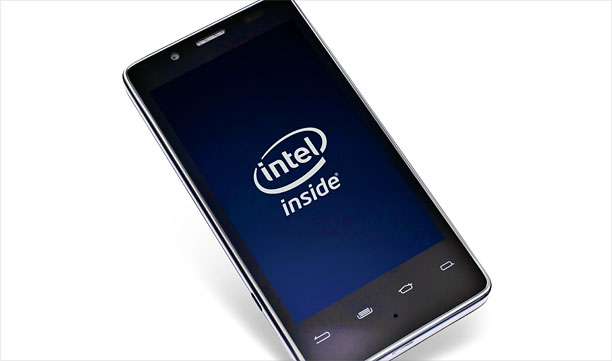
That resulted in a statement from Christopher Croteau, managing director of Intel's Software and Services Group and a board member with the Tizen Association, saying that the giant chip maker was committed to the Linux-based open-source OS.


The tech giants are looking to ramp up the number of mobile apps for Tizen with a contest that will offer $4 million in prizes.

Intel and Samsung Electronics are looking to boost their nascent Tizen mobile operating system with an app developer contest that will offer more than $4 million in cash prizes.
Top winning applications in the Tizen App Challenge, which launched July 9 and runs through Nov. 1, could win as much as $200,000. Intel and Samsung expect more than 50 developers to win some amount of money.
The announcement of the contest came a couple of weeks after reports surfaced that Samsung was delaying the release of its first Tizen-based smartphones, and after a Russian blogger said that Tizen was not just delayed, but possibly was dead.