Showing posts with label Mobile Technologies. Show all posts

September 13, 2013

Karbonn A8 with 4-inch display, dual-core processor, Android 4.2 now available for Rs. 6189


Karbonn A8
Karbonn A8, the latest smartphone from Karbonn is now available from online retailer Saholic. It has a 4-inch WVGA (480×800 pixels) capacitive touch screen display, powered by a 1 GHz dual-core  processor and runs on Android 4.2 (Jelly Bean). It has a 5-megapixel auto focus rear camera with LED flash and a 0.3-megapixel (VGA) front-facing camera. It has Dual SIM support, 3G connectivity and packs a 1500 mAh battery. Karbonn launched the flagship S9 Titanium with a 5.5-inch HD display back in July.
Karbonn A8
Karbonn A8 specifications
  • 4-inch (480×800 pixels) capacitive touch screen display
  • Android 4.2 (Jelly Bean) OS
  • 1 GHz dual-core Processor
  • Dual SIM (GSM + GSM) with dual standby
  • 5MP rear Camera with flash
  • 0.3MP (VGA) front-facing camera
  • 3.5mm audio jack, FM Radio
  • 3G, Wi-Fi 802.11 b/g/n, Bluetooth, GPS
  • 512MB RAM, 4GB Internal memory, Expandable memory up to 32GB with micro SD
  • 1500 mAh battery
The Karbonn A8 comes in Black and White colors and is priced at Rs. 6,189.

Vivid Blue HTC One and One mini officially announced


HTC One Vivid Blue
Images of the Blue HTC One surfaced last month, now HTC has officially announced that the HTC One and the One mini would come in Vivid Blue colors. The HTC One was released in Silver and Black colors initially and the Red HTC One was released in China and UK recently. The One mini was released in Glacial Silver and Stealth Black colors similar to the One.
New colors would offer customers range of choices. Samsung announced the Galaxy S4 in five new colors including Pink, Blue, Red, Purple and Brown back in June, in addition to the Black Mist and White Frost color variants. Hope other companies like LG follow them and launch their flagship smartphone in range of colors in addition to the Black and White colors.
The new Vivid Blue HTC One and One mini models would be available in select markets from Q4 2013.
 Get it at http://astore.amazon.com/mindcrackzblo-20

September 7, 2013

Chrome Beta v30 for Android brings new gesture navigation, better image search and more


Chrome v30 Beta for Android
Google has updated the Chrome Beta for Android to version 30 that brings a lot of new features including option to right-click an image to do an image search, new gestures to switch tabs, lot of new API support for users and developers. With the new gestures you can now swipe horizontally across the top toolbar to quickly switch tabs instead of edge-swipe.
New features in Chrome Beta v30 for Android
  • Search content related to an image by right-clicking on it, or by long pressing it and selecting
  • Swipe horizontally across the top toolbar to quickly switch tabs
  • WebGL is now enabled by default in high-end devices such as Nexus 4 or Nexus 7
  • Support for device motion of the Device Orientation API that provides information about device acceleration and rotation rates
  • Support for MediaSource API for adaptive media streams and time-shifting live streams (Enabled by default on Jellybean+ devices)
  • New experimental flags: Web Speech API and the Vibration API
Download Google Chrome Beta for Android if you don’t have it yet.

Sony Xperia Z Ultra Review


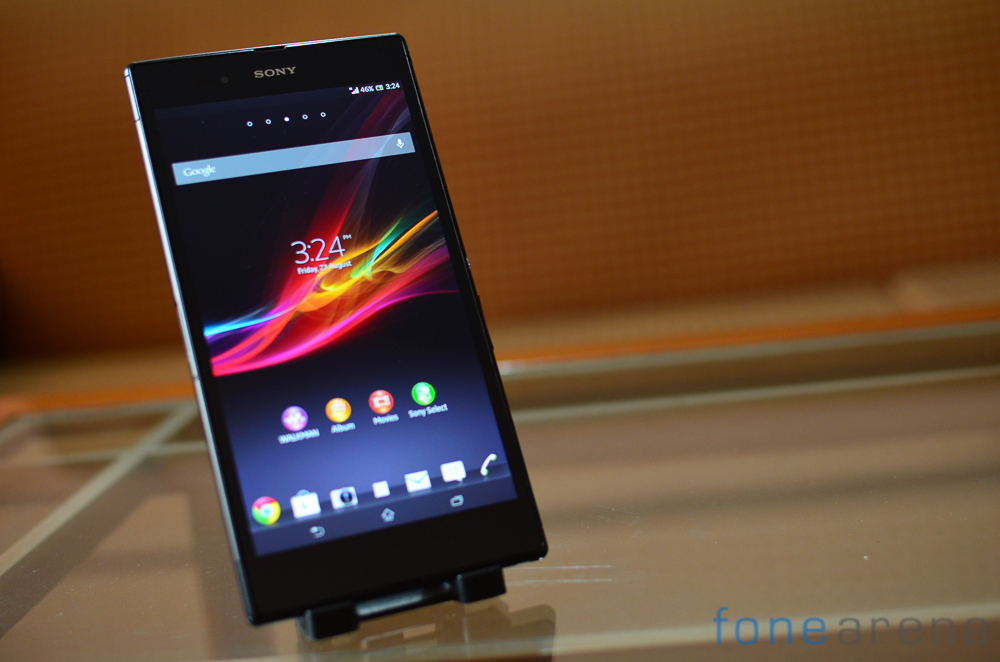
Sony-Xperia-Z-Ultra-5
Every once in a while we come across a product that is a bit ahead of the curve or perhaps such a niche that it is hard to accept it in its current incarnation. The Xperia Z Ultra while not exactly revolutionary, does have the inklings of what might be come the future of smart computing. But is it good enough to convince us ? Read on to find out.
Design
Two words come to your mind when you view the Xperia Z Ultra. Gorgeous, Massive. The all glass smartphone – tablet hybrid is a play on the design first pioneered by Sony on the Xperia Z earlier this year. Sony has a heritage of making beautiful products and the craftsmanship on the Xperia Z Ultra is a testament to that design culture.
Sony-Xperia-Z-Ultra-12
The front of the device is comprised of what is perhaps the largest smartphone display we’ve come across yet. Indeed the handset that clocks in at 179.4 x 92.2 x 6.5mm stretches the limits of smartphone dimensions. The glass and metal build of the handset also take a toll on the weight of the device that comes in at well above 200 grams.
Sony-Xperia-Z-Ultra-10
Up top next to the Sony logo lies the front facing camera and the lack of buttons (capacitive or physical) below the display helps keep the surface of the black glass front, untarnished. The front camera is a 2 megapixel unit. An LED notification light can also be seen here. Along the upper edge of the device is the earpiece while the mic is at the bottom edge. The front of the phone is essentially just the 6.44 inch Full HD screen.We had a few concerns over the slim bezels that make it a bit hard to hold and interact with the device but its not a big enough hassle to be a deal breaker.
Most of the ports and buttons on the handset lie towards the right. Up top is the 3.5mm audio jack. Right next to it, hidden under a flap, is the micro SD and micro SIM card slot. A circular machined aluminum button is placed centrally and offers good feedback, is conveniently located to switch the device on or off. In a move that is not very common yet which makes sense given the size of the handset, the volume rocker is placed below the power key of the Xperia Z Ultra. On the other side is a magnetic dock connector.
Sony-Xperia-Z-Ultra-11
The glass back of the phone is a fingerprint and smudge magnet but looks stunning when pristine. Sony branding is visible right in the center with an NFC logo above it and a camera that is slightly offset to the left. The phone does not have an LED flash. Over all the Z Ultra is a good example of Sony’s attention to design and detail. The slim shell and aluminum edges that meld into the inky blackness of the glass panels on either side  give it an understated elegance. The Z Ultra is simply put, gorgeous.
Software
The Xperia Z Ultra ships with Android 4.2.2 Jelly Bean on board. As expected, the software build is rife with customizations. While a lot of these features are value additions, we were baffled to see the curious omission of some very useful features like the quick notifications panel. No doubt Sony’s implementation of a toggles bar works well enough but we’d rather see the full range of toggle switches.
Screenshot_2013-08-23-15-34-09
If you’ve used the Xperia Z then you know exactly what to expect. The homescreen has a launcher bar at the bottom below which lie the onscreen controls. The launcher bar defaults to the most popular apps but you can replace it with whatever apps you might want. Heading into the app launcher, application icons are arranged in a grid. You can have this in alphabetical order or even your own custom order if that’s what you like.
Screenshot_2013-08-23-15-43-14
The multimedia applications onboard including the image gallery, music player and video player are pretty much identical to those previously seen on devices like the Sony Xperia Z or the Xperia Z tablet. The Ultra ships with Sony’s small apps on board which are essentially multi tasking widgets as seen on devices by competitors as well. Running through some of the preinstalled apps, you get Socialife which is essentially a feed aggregator in the same vein as Flipboard.
Screenshot_2013-08-23-15-37-49
The Sketch app lets you draw doodles on the screen using any object you might have on hand. Yes, it works quite well with your finger too. TrackID is Sony’s version of Soundhound while Sony Select works as an app recommendation service. There are a few more apps on board like Reader that as the name suggests, is an application for Sony’s eBook service. None of the apps really get in your way and quite a few can be deleted as well.
Display
The display on the Xperia Z Ultra is a departure from the one on the Xperia Z and this is a very good move indeed. The Z while a good phone was let down by a poor display. Sony has learnt from its mistakes and has bestowed upon the Z Ultra, one of the best Full HD panels out there. The 6.44 inch panel has Full HD resolution and has Sony’s Triluminos technology built in. Sony’s Triluminos technology is an RGB LED tech that has been seen previously on televisions. The technology uses a blue LED to stimulate quantum dots and create the red and green colors. These colors appear particularly sharp. The 1920 x 1080 resolution resulting in 344 ppi is also responsible for making text appear extremely crisp.
Sony-Xperia-Z-Ultra-1
The display is sharp, bright and has wide viewing angles. We found the colors on the screen to be very natural and it was possible to read content even in bright sunlight though the reflective display makes it slightly hard. As demonstrated above in the Sketch application, it is possible to use a stylus or even a standard pen to interact with the touch screen. The screen however does not detect pressure changes. Over all the screen on the phone will not leave you with anything to complain about. It is a stunning panel that makes viewing media , reading very enjoyable.
Performance
Under the hood of the Z Ultra is a Snapdragon 800 processor clocked at 2.15Ghz making it one of the most powerful phones out there. The Snapdragon 800 processor is a veritable beast that delivers some of the best performance we’ve seen so far in a smartphone.
fsu2
Featuring 4 asynchronous Krait 400 cores which is an improvement over the Krait 300 in the Snapdragon 600, the chip has been built on the 28nm process. The Adreno 330 GPU delivers upto 50% improved performance over the Adreno 320 in the Snapdragon 600. This coupled with the 2GB of RAM means that no matter what you throw at the handset, its not going to run out of steam anytime soon. Real life performance is top notch as expected. The interface elements remain smooth and lag free which is how it should be on a device of this calibre. The handset manages to render even complex web  pages without any issues and without any checker boarding. If synthetic benchmarks matter to you, then we’ve got you covered over in our Sony Xperia Z Ultra benchmarks post.
We’ve already shown you the benchmarks for the handset and here are some of the more important ones.
Sony Xperia Z Ultra Quadrant
In the Quadrant benchmark, the Z Ultra scores 18,633 which places it well ahead of the competition. The score is close to 6000 points ahead of the HTC One with its Snapdragon 600 processor. It lags behind the Qualcomm Snapdragon 800 MDP but that is likely because of the custom skin on the phone.
Sony Xperia Z Ultra Vellamo2 HTML5
Similar results can be seen in the Vellamo benchmark where it scores 2929 points. Vellamo benchmarks web performance and in terms of actual usage, the handset definitely impresses.
Camera
The weakest link in the Xperia Z Ultra’s arsenal of features is the camera. Based on an older generation Exmor R sensor, the 8MP camera doesn’t really impress. We’ve already talked about the lack of an LED flash. We did miss having a dedicated camera key on the handset due to the unwieldy dimensions of the phone.
Sony-Xperia-Z-Ultra-8
The camera interface is the same as we’ve seen on other Xperia devices. Launching the app, you see only the most important buttons on the display. On the right, below the gallery shortcut, is the shutter key as well as the video record key. It is possible to shoot stills while recording video.
Screenshot_2013-08-23-15-36-18
Below it is the toggle to switch between the front and rear cameras. Over on the left is the mode select key towards the top while the settings button is located at the bottom.
The Superior Auto mode is what is set as the default option wherein the camera auto selects the best white balance, scene mode settings and all you have to do is to press the shutter key. If you’d rather have control in your hands, you can tap this and chose from a range of modes including burst mode, panorama and a variety of scene modes. Suffice it to say that there are enough options on hand to let you make maximum use of the camera. Which brings us to image quality or the relative lack of it. 
DSC_0037
The Xperia Z Ultra is using an older generation sensor and the image quality isn’t really good. There is a lot of noise in captured images and compression artifacts can be seen aplenty. Colors are generally over saturated making them seem unnatural and highlights are blown out.
DSC_0027
Things take a dramatic turn for the worse when shooting in less than ideal lighting conditions. The white balance was often completely off and noise levels shot up through the roof to deliver more or less unusable images. Additional photo samples are embedded below.

Video recording is done at Full HD resolution and the end results are decent enough. Colors are again over saturated but videos retain a decent amount of details as long as lighting conditions are good. Here’s a video sample shot on the Sony Xperia Z Ultra.
Multimedia & Gaming
Multimedia consumption is definitely the forte of the Xperia Z Ultra. The large 6.4 inch display screams out to be used for watching movies and playing games. Additionally, the device works very well as an eReader. The size of the screen makes reading long form content very enjoyable and it is easy to load up content through the pre installed Sony Reader app or via the downloadable Kindle app in addition to many others like Rockstand.
Sony-Xperia-Z-Ultra-6
In our standard multimedia test, the Z Ultra was easily able to play back the usual audio codecs like MP3, AAC, FLAC. Audio quality was decent and it is possible to use equalizers to tweak it just the way you like it. Our video test was equally successful and the device played back up to high bitrate content without batting an eye lid. We did face a few concerns with MKV files and audio streams but this was easily corrected by using an alternate video player like MX Player.
Gaming performance on the handset is topnotch and the Snapdragon processor, Adreno 330 GPU combo really comes into its own here. We tested out a range of games and found performance to be excellent. If multimedia consumption is your primary focus in a smartphone then the Sony Xperia Z Ultra should be a good fit for your use case.
Connectivity & Battery Life
Connectivity options on the handset range from 3G HSPA+ to WiFi 820.11 a/b/g/n/ac.  Wi-Fi Direct, DLNA support is also built in. The phone supports Bluetooth 4.0. GPS/ GLONASS and NFC is also built in. The 16GB of storage can be expanded via the microSD card slot. There’s almost 12GB of free storage available at launch on the handset.
Sony-Xperia-Z-Ultra-4
The battery pack on the handset is rated for 3,050 mAh which might sound a lot but doesn’t deliver nearly the longevity you’d expect. We got about a work day ie 14-18 hours at max of usage time with our usual work load. Your mileage will vary but as a benchmark you should hope to get at least an entire work day of usage time from the handset. Boasting quick charge capabilities, the handset gets juiced much faster than the competition.
Miscellaneous
The handset like most recent devices from Sony’s Xperia line of devices is both water and dust proof. Having earned itself an IP-58 rating, the device can theoretically be kept 5 feet under water for up to 30 minutes.Xperia-Z-Ultra-1
While we weren’t brave enough to test that claim, we did use the handset in rainy weather and it coped up just fine. The screen isn’t particularly responsive when wet but you can simply wipe it clean and continue use. The IP58 certification means that you should be able to use in the middle of a dust storm if you wish to do so, though we won’t really recommend it for your sake!
Sony-Xperia-Z-Ultra-9
Given the unique position that the handset enjoys due to its gargantuan proportions, here’s an image to demonstrate just how big the phone is. Holding up the phone is most definitely a stretch, unless you have giant sized hands. People will judge if you use this device to actually make phone calls and you’d be best served by a bluetooth headset.
Here’s a video comparing the size of the display with some of the competition. Oh and the device easily slips into the pocket of a regular sized pair of jeans but it does create an awkward bulge in your pocket when you sit down.
Conclusion
With the Z Ultra, Sony has created a device that aims to bridge the divide between smartphones and tablets by being a compelling offering that transcends both categories. The combination of stellar design and compelling hardware means that there is no doubt that the Z Ultra deserves its flagship status.
Sony-Xperia-Z-Ultra-15
That said, as a pure smartphone, there is something to be said about the unwieldy proportions of the device. Unless you are specifically looking for a hybrid device, the Z Ultra is simply too big to be comfortably used as a phone. The poor camera of course disappoints. For prospective buyers, the decision is fairly easy to make. You can either handle the size or you can’t. No two ways about. The Sony Xperia Z Ultra is priced at Rs. 44,599 in India.
Pros
  • Design
  • Internals
  • Display
Cons
  • Camera
  • Size can be a bit unwieldy

September 6, 2013


Micromax Canvas Doodle 2 A240 with 5.7-inch HD display, Android 4.2 listed online


Micromax Canvas Doodle 2 A240
Micromax has been teasing the upcoming Canvas Doodle 2 A240 on their Facebook page for the past few days, now the smartphone has been listed on Flipkart. The Micromax Canvas Doodle 2 A240 would have a 5.7-inch (1280 x 720 pixels) HD IPS display, powered by a 1.2 GHz quad-core processor and run on Android 4.2 (Jelly Bean). It would come with a 12-megapixel camera with dual LED flash and a 5-megapixel front-facing camera. It would have with Dual SIM support with dual standby similar to other Micromax smartphones. It also comes with a stylus and pack a 2600 mAh battery.
Micromax Canvas Doodle 2 A240
No details about the RAM yet, but it is likely to come with 1GB of RAM similar to the Canvas 4. It would come with Blow to unlock feature, unique M! Doodle app. Micromax launched the Canvas Doodle A111with a 5.3-inch FWVGA display and a quad-core Snapdragon 200 processor back in May.
Micromax Canvas Doodle 2 A240 specifications
  • 5.7-inch (1280 x 720 pixels) HD capacitive touch screen IPS display
  • 1.2 GHz quad-core processor
  • Dual SIM (GSM + GSM)
  • Android 4.2 (Jelly Bean)
  • 12MP rear camera with Dual LED Flash
  • 5MP front-facing camera
  • 3.5mm audio jack
  • 12GB internal memory
  • 3G, WiFi 802.11 b/g/n, Bluetooth, GPS/A-GPS
  • 2600 mAh battery
No word on pricing yet since the listing says coming soon without any price tag, but it is likely to be priced similar to the Canvas 4.

September 3, 2013

Sony Xperia U phone Full Specifications

It packs GHz Dual Core CPU on board which is sufficient for average usage. There is just 512 mb RAM. The screen resolution of Sony Xperia U phone is 854*480 pixels and the display is of 3.5 inch. The total pixel count leads to density of 280 ppi. It measures 112 mm x 54 mm x 12 mm. It has internal memory capacity of 8 GB. The primary camera at the back of device is of 5 megapixel. There is 0.3mp VGA camera at front for video-calling and other needs.

NameSony Xperia U
BrandSony
Screen Size3.5
Screen Resolution854x480 pixels, capacitive multitouch, scratch resistant glass
Pixel Density280 ppi
Height112 mm
Width54 mm
Thickness12 mm
Weight110 g or 3.88 oz
ProcessorNovaThor U8500
Processor Speed1GHz Dual Core
GraphicsMali-400 GPU
RAM512 MB
Internal Storage8 GB
Memory CardExternal memory card not supported
WiFiWi-Fi 802.11 b/g/n
Dual Band WiFino
BluetoothYes, 2.1
3Gyes
4Gno
3G Speed14.4Mbps
Camera5 megapixel
Photo Resolution2592 x 1944
Flashyes
Video RecordingYes
Video Recording Quality720pHD @ 30fps
Front Camera0.3mp VGA
Release DateFebruary 2012
OSAndroid 2.3 GingerBread, upgradeable to Android 4 ICS
NFCNo
Battery1320mAh
Other Features
  • Sony Mobile Bravia Engine powered display.
  • Sony 3D Surround Sound audio technology.
  • Out of 8GB internal memory, only 4GB available to user.
  • Available in black, white, pink, yellow colors.
  • Free 50GB box cloud storage.

September 2, 2013

Huawei plans to launch 5G with 10Gbps speeds by 2020

Huawei aims to introduce commercial 5G networks, touted as '100 times faster' than 4G, by 2020.
Huawei plans to launch 5G with 10Gbps speeds by 2020
China-based telecom equipment maker Huawei has said it is working on 5G network and aims to launch commercial fifth generation networks by 2020. In a guest column in Forbes, Huawei's CEO Ken Hu reveals 5G networks will deliver mobile broadband at speeds of up to 10 Gigabytes, or 100 times the speed of 4G networksavailable today.
According to Ken Hu, Huawei's R&D teams have been working on 5G for several years with hundreds of engineers assigned full time on 5G development. “....Wearable devices such as watches and glasses are becoming the new development and fashion trends. Through today’s broadband connected devices, machines are learning to sense and anticipate human behavior and provide context-aware services. These new connected smart devices will help automate the way things get done with levels of intelligence or digital wisdom we have not seen before,” he writes.
“As business leaders, we need to think about today through the lens of tomorrow where the internet is a fundamental, ubiquitous infrastructure like electricity or roads. We need to acknowledge and embrace this restructuring of the world through digital technology.”
Huawei's efforts to develop 5G comes at a time when several countries including the U.K., India and China have just begun to introduce the fourth generation networks.
Bloomberg reports China is working with companies in Taiwan to develop 5G technology. According to reports, China's Ministry of Industry and Information Technology Deputy Minister Liu Lihua has invited Taiwan companies including Hon Hai Precision Industry Co. and MediaTek Inc. to jointly develop 5G.
Reports suggest India and Israel have agreed to work together on the development of 5G technology. “"Israel has technology and innovation, India has the capital and market. The two areas which emerge out of discussion related to telecom were: reducing roaming charges between India and Israel and exploring the possibilities of standard formulation, research and development, and manufacturing in the area of 4G and 5G,” Times of India quoted an Indian telecom department official as saying.

Oppo R819 Hands on First Impressions

Oppo R819 Hands on First Impressions


oppo-r819-hands-on-photos-3
Only yesterday we saw Oppo reveal its latest smartphone, the curiously named R819. After a critical success of the Oppo Find 5, which we think is one of the best Android hardware available on the market, the company has sought to reach lower price points with a smaller and a more mid-range device. We see the R819 as Oppo’s effort to claim volume as encouraging market results have cropped up at home. And surprise! We’ve already got the R819 here in our labs and here are our first impressions of the device in detail, read on!
Note: This is a pre-production device, not the final retail unit.
oppo-r819-hands-on-photos-5
Thin and Light. These two words are probably the most used adjectives in the world of smartphones, but they totally belong with the Oppo R819. Measuring just 7.3mm in thickness, the device is among the thinnest in the world, only bested by the company’s own Finder and a few other devices. It also weighs a lot less, at 110g, which, we think is almost perfect for a good handling of the device because it’s neither too less to make it seem hollow nor too heavy to make it uncomfortable. The iPhone 5 is less heavy, but it does feel hollow unlike the Oppo R819.
oppo-r819-hands-on-photos-1
The design of the Oppo R819 is more conservative than the Find 5. The minimalism and thin bezels are nowhere to be seen on this device, and with a completely white panel, including the faceplate, the slickness is less than what we had expected.
oppo-r819-hands-on-photos-4
The front facing camera and the sensors are clearly visible and that’s one thing we usually detest in white coloured smartphones.
That said, the sides are lined with a strip of metal which makes it look premium. The left side of the phone has the plastic power/lock switch and the right side has the volume rocker. The 3.5mm jack is located at the top while the micro USB and the primary mic are located at the bottom.
oppo-r819-hands-on-photos-2
Made of polycarbonate, the device is covered in glossy plastic with a subtle pattern on its back.
oppo-r819-hands-on-photos-14
The back cover is not removable and hence you have a Dual SIM card slot on the outside, which we think is one of the first implementations on a mobile device. Initially we thought it to be a single SIM slot, but only after opening it did we know that there are actually two micro SIM slots inside the pull out tray. When you consider how thin this device is, the SIM card slot seems like the best possible use of space, which is brilliant.
oppo-r819-hands-on-photos-9
The device is so thin, the camera unit slightly projects out of the back, with a chrome ring around it for protection. This is not noticeable at first glance but is evident once you run your hands over it. There is a single LED flash and a secondary microphone around the camera unit along with a loudspeaker on the bottom left of the back.
oppo-r819-hands-on-photos-11
Coming back to the front, you have a 4.7 inch 1280×720 display, which is pretty decent, if our initial impressions are considered. We noticed some slight bleeding of light around the edges of the screen, but we will test it further to see if it’s just a brightness problem or may be a unit-specific issue. The viewing angles are above average and the colour balance/contrast is nicely done, but this is no where near the quality of the Find 5. But considering the fact that the price is a lot lesser, the display performance is justified.
The internals are powered by a MediaTek MT6589 1.2 Ghz Quad Core processor with a PowerVR SGX544 MP2 GPU. The performance is in line with the various other MediaTek based devices we have tested, but we will let you know more about it in our full review. There is 1 GB of RAM and 16 GB of internal storage with no options to expand it using a micro SD card. The 8 megapixel camera on the back is a Sony EXMOR BSI sensor with a fast f2.0 aperture, and our first impressions of it is that it is average. We’ll have more to say about the camera real soon.
oppo-r819-hands-on-photos-12
Coming to the software, the pre production device give to us runs on the company’s own Color ROM, which is an upgrade over the one present on the Oppo Find 5. It is a minimally beautiful and functional UI with the exception of a cartoonish launcher with lesser features than others. The overall functionality seems to have improved and is a lot more cleaner than what we had seen on the Find 5. There are a lot more nice options using gestures, like double tap to wake the phone, pick up to directly answer a call, etc..
oppo-r819-hands-on-photos-13
These features are present only in the Color ROM. Since the R819 comes with an unlocked bootloader, you can happily flash the AOSP stock ROM onto the device, provided directly from the company, or just use the Color ROM and its frequently updated features. An improvement over the Find 5 is always good.
That’s about it for our first impressions of the device. Oppo has clearly gone for a device that can move volumes, with a ridiculously svelte thin and light frame. At first glance, the other features and specifications don’t seem that special, but we are continuously testing the device to find out what’s new, what works and what doesn’t. So stay tuned for our complete review, in which we will discuss the device in complete detail.